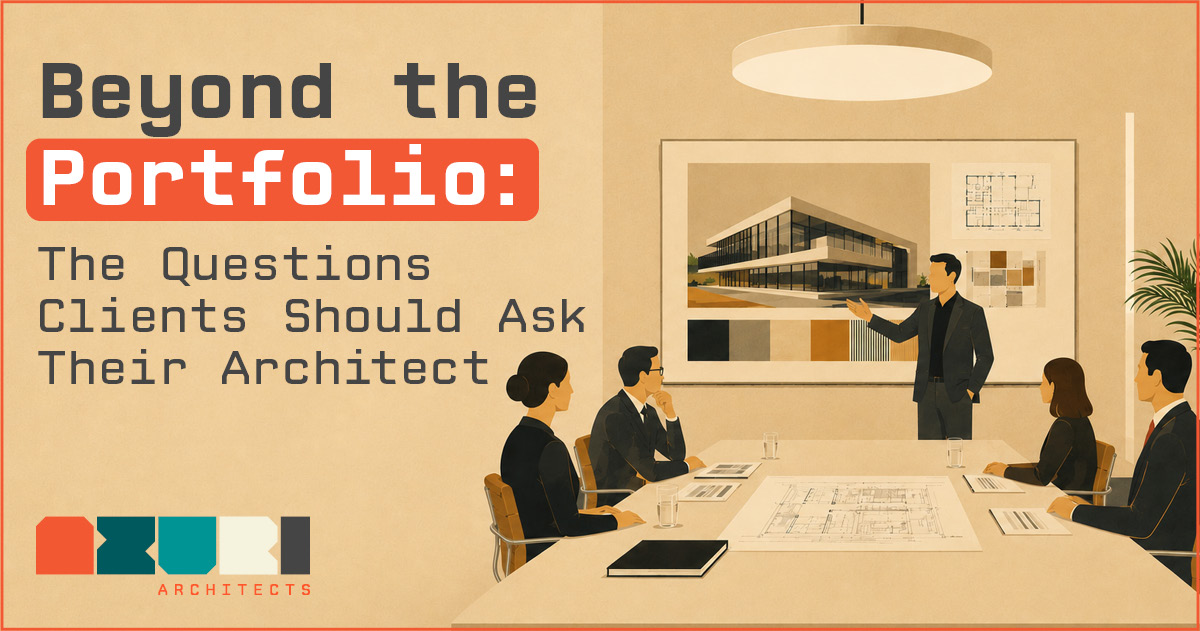
Beyond the Portfolio: The Questions Clients Should Ask Their Architect
Choosing an architect involves far more than reviewing a portfolio. This article explores the key questions clients should ask about communication, decision-making, project coordination and commercial insight before appointing an architectural practice.
Categories:
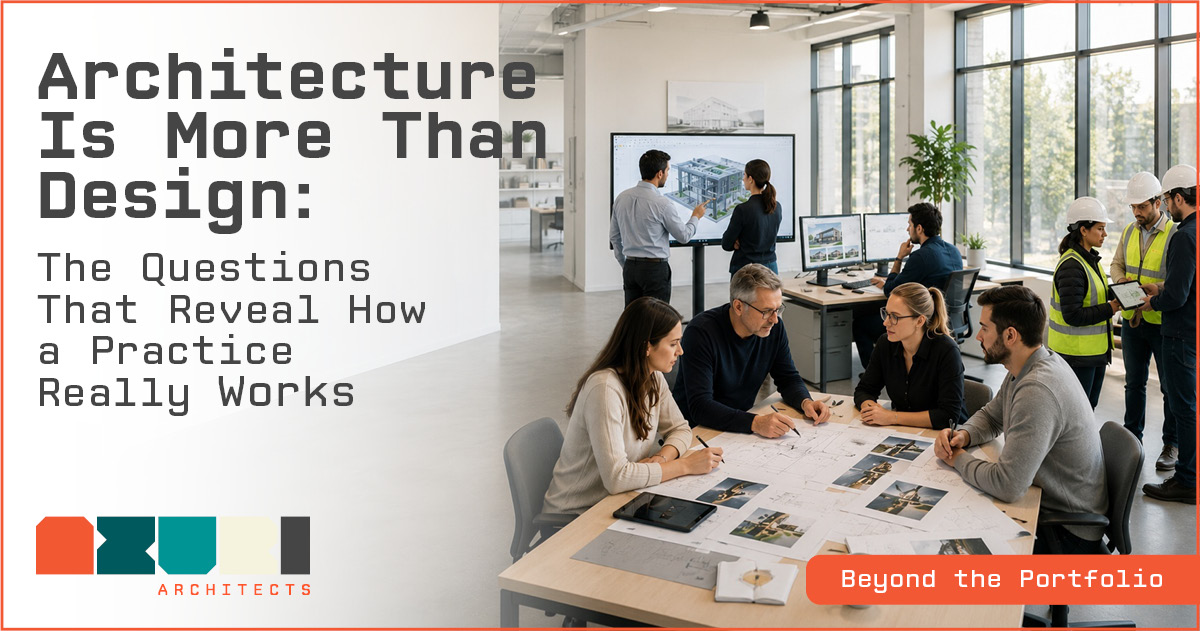
Architecture Is More Than Design: The Questions That Reveal How a Practice Really Works
When most people choose an architect, the first instinct is often to look at their portfolio of completed projects. And understandably so. Architecture is visual. We respond instinctively to buildings, spaces, materials and atmosphere. But long before a project is photographed, occupied or experienced, it is shaped by something less visible: process.
How an architect approaches communication, decision-making, coordination and problem-solving will often have a greater impact on the success of a project than aesthetics alone. Two practices may produce equally compelling work, yet operate in entirely different ways. Some are highly collaborative and iterative, while others are more structured and architect-led. Some prioritise conceptual exploration early on, while others focus immediately on feasibility, efficiency and technical resolution.
Understanding these differences helps clients identify not simply a “good architect”, but the right architectural partner for the kind of project they are undertaking.
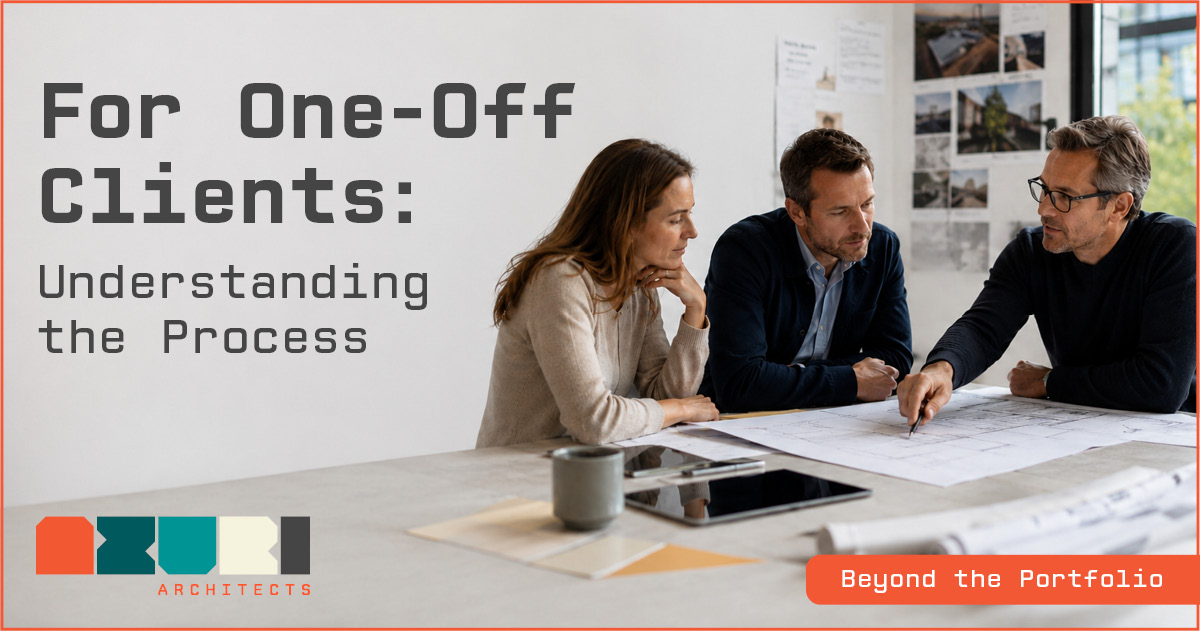
For One-Off Clients: Understanding the Process
For many private clients or business owners, undertaking a building project may be a once-in-a-lifetime experience. Whether it’s a family home, a factory, a private office or a small commercial development, the design and construction process can feel unfamiliar and, at times, overwhelming.
In these situations, the role of the architect often extends beyond design. A good architect becomes a guide through a complex process – helping clients navigate decisions, manage risk and bring clarity to what can otherwise feel uncertain.
Here are some common questions clients may have when embarking on a building project…
“What exactly does an architect do?”
This may sound like a simple question, but it is often one of the most important places to start.
Many clients understandably associate architects primarily with drawings and aesthetics. In reality, architecture often involves far more: consultant coordination, technical detailing, approvals, contractor engagement, project management and navigating the relationship between budget, design intent and practical constraints.
A strong architect should be able to explain their role clearly – including where their responsibilities begin and end. Just as importantly, they should be able to communicate this without unnecessary jargon.
Often, the answer itself reveals a great deal about the practice: how they think, how they communicate and how they approach client relationships.
“How will decisions be made, recorded and approved?”
Building projects involve hundreds of decisions over time. Some are relatively minor, but others carrying significant cost or programme implications.
Clients should understand:
- Which decisions sit with the architect
- Which remain the client’s responsibility
- Which decisions need to happen early
- How approvals and revisions are documented
- How changes are communicated during construction
This matters because poorly managed decision-making is often where projects begin to drift. Delayed approvals, unclear instructions and undocumented changes can quickly create confusion, budget pressure and tension between project teams.
Clear processes help keep expectations aligned and reduce unnecessary risk.
“How are fees, scope changes and onsite adjustments managed?”
No project remains entirely static from concept to completion. Requirements evolve, unforeseen conditions emerge and priorities sometimes shift during construction.
The important question is not whether changes happen, but how they are managed.
Clients should feel comfortable asking:
- What is included within the agreed scope?
- How are additional services handled?
- How are onsite changes documented?
- How are cost implications communicated?
A well-structured process creates transparency around these adjustments and helps maintain trust throughout the lifespan of the project.
“What experience do you have with projects similar to mine?”
Experience matters, but relevance matters just as much.
Designing a private residence requires a different type of thinking from designing a logistics facility or a commercial office environment. Even within similar project types, scale, operational complexity and client expectations can vary significantly.
Research into architectural project performance has shown that strong project outcomes are closely linked to effective communication, coordination and structured delivery processes – all of which are often strengthened through relevant project experience. An architect familiar with similar project types is more likely to anticipate challenges early, coordinate effectively and navigate the practical realities associated with that type of building.
Clients should therefore look beyond portfolio imagery and ask:
- What challenges did previous projects encounter?
- How were they resolved?
- What lessons informed later work?
- Are references available?
These conversations often reveal far more about an architect’s problem-solving ability than finished photographs alone.
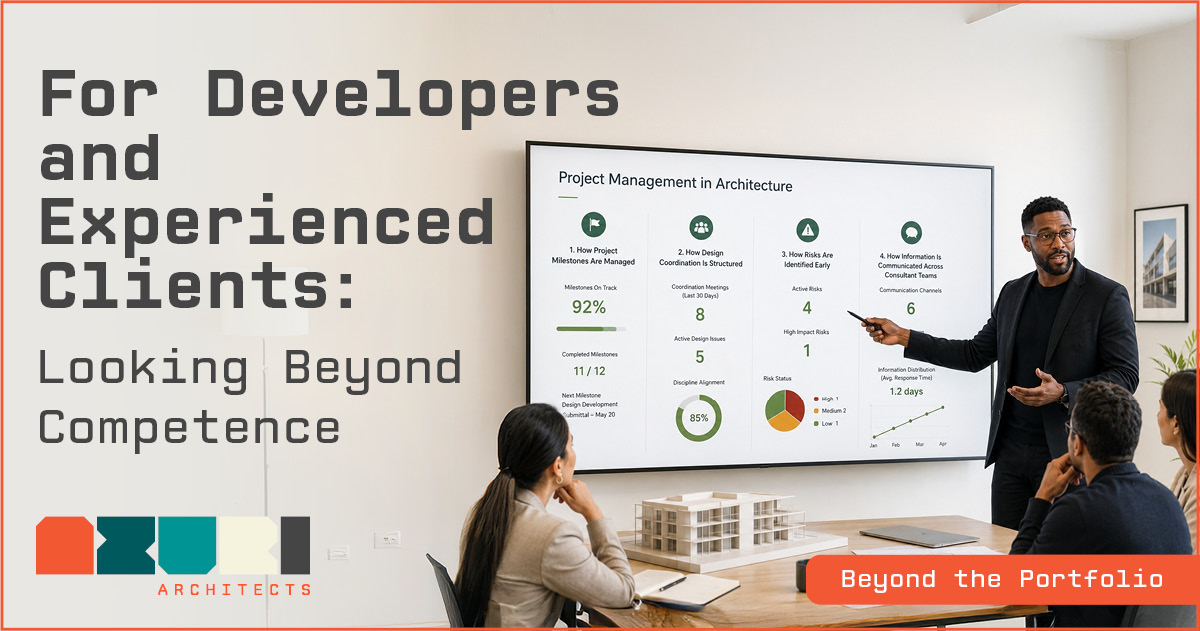
For Developers and Experienced Clients: Looking Beyond Competence
Experienced developers and repeat commercial clients often approach architectural appointments differently. In many cases, baseline competence is already assumed. The focus shifts instead toward value-add, efficiency, coordination and commercial insight.
The architect becomes not only a designer, but a strategic project partner.
Questions in this context, may look something like this…
“How quickly can the project move toward meaningful feasibility?”
For developers, timing and information are critical.
Early-stage architectural input influences:
- Site yield
- Spatial efficiency
- Parking ratios
- Circulation
- Construction viability
- Long-term operational performance
At this stage, the goal is not simply to produce drawings but generate sufficiently accurate information to support investment decisions.
An effective architectural process should help feasibility studies take shape quickly, while still leaving room for refinement and strategic adjustment.
“How do you improve commercial outcomes rather than simply protecting the budget?”
This is an important distinction.
Architects are often expected to “stay within budget”, but the stronger question is how design thinking can improve commercial performance overall.
Sometimes the best long-term solution is not the cheapest one upfront. More durable materials, better environmental performance, improved circulation or more adaptable planning may carry higher initial costs while delivering stronger operational or financial returns over time.
Good architectural thinking should help clients evaluate trade-offs clearly, rather than simply reduce scope whenever pressure arises.
“How do you manage decision-making during critical project stages?”
Experienced clients understand that early-stage decisions often carry disproportionate consequences later in the project lifecycle.
Programme delays, coordination gaps and unresolved design issues become increasingly expensive as projects progress.
This makes structured decision-making processes essential. Developers should understand:
- How project milestones are managed
- How design coordination is structured
- How risks are identified early
- How information is communicated across consultant teams
Strong architectural processes reduce friction and create greater certainty as projects move toward implementation.
“How do you integrate with consultants and external teams?”
Architecture rarely happens in isolation.
Commercial projects rely on coordination between architects, engineers, quantity surveyors, project managers, contractors and specialist consultants. The efficiency of these relationships often has a direct impact on programme, cost and build quality.
Industry research consistently highlights early consultant collaboration and coordinated communication as critical factors in reducing project friction, improving documentation quality and strengthening overall project outcomes.
Clients should understand how architectural teams:
- Coordinate information
- Resolve clashes
- Manage communication
- Maintain accountability across disciplines
In many projects, this coordination ability becomes one of the defining differences between an efficient process and a difficult one.
“How does your methodology scale across repeat projects?”
For repeat clients and developers managing multiple projects, consistency and scalability matter.
An architectural process should become more refined over time – improving efficiency, reducing duplication and streamlining coordination across projects without defaulting to generic or repetitive design responses.
This does not mean treating every building the same way. Rather, it means developing systems and workflows that allow knowledge, lessons and efficiencies to carry forward intelligently from one project to the next.
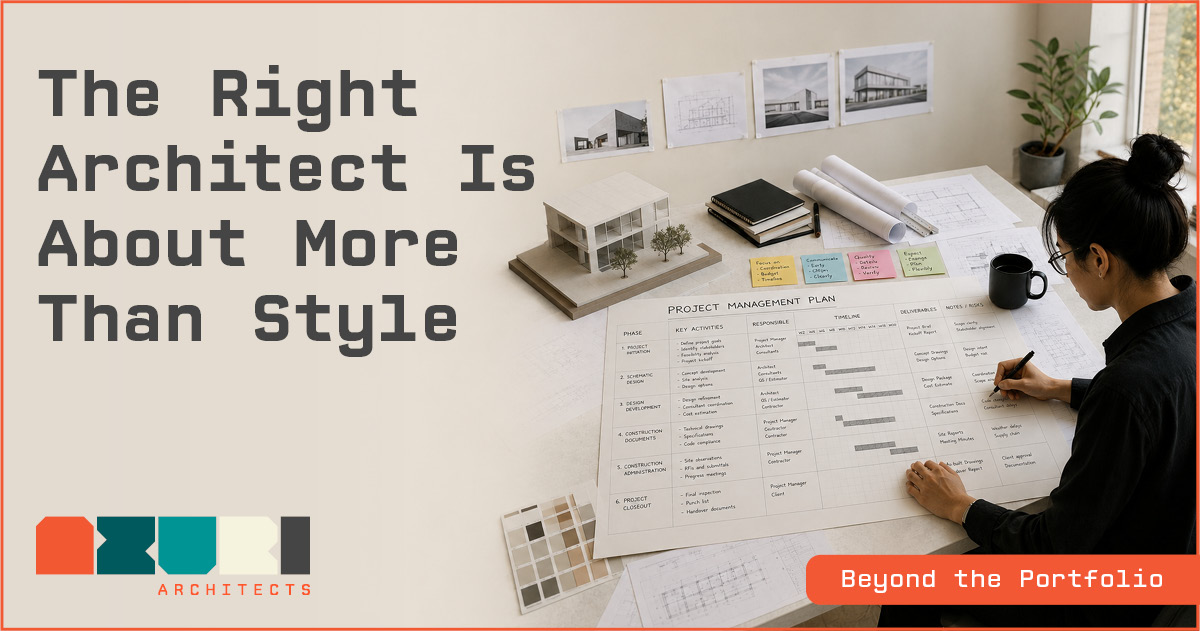
The Right Architect Is About More Than Style
Whether someone is building their first home or managing a large commercial portfolio, the underlying concerns are often remarkably similar. People want clarity. They want confidence that risks are understood early, that communication remains open and that the project is being guided carefully from concept through construction.
Portfolio images will always matter. But architecture is ultimately shaped through conversations, decisions, coordination and process long before the final photographs are taken.
The right architect is therefore rarely defined by style alone. More often, the difference lies in how a practice thinks, communicates, collaborates and responds over time.
And that is something no portfolio can fully reveal on its own.